
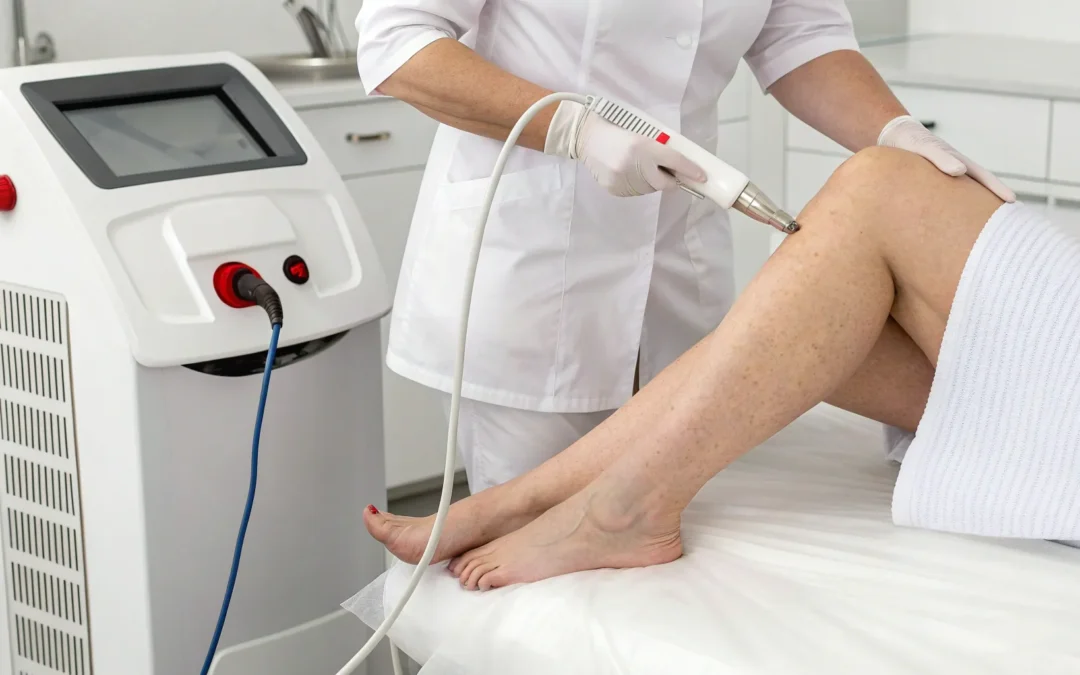
So, you’re ready to do something about your spider veins. Now for the big question: which treatment is right for you? Laser treatment for spider veins is a popular choice because it’s non-invasive—no needles or incisions. It simply uses focused light to make veins disappear from your skin’s surface. But does it really work? And how does it stack up against other options? This guide will walk you through the entire process, from how the technology works to the results you can expect, so you can make a decision that feels right for you.
Key Takeaways
- Laser treatment precisely targets small veins: This non-invasive procedure uses focused light energy to heat and collapse fine, superficial spider veins, making it an excellent choice for delicate lines on the face and legs.
- Achieving clear skin is a gradual process: Most people need a series of one to six treatments to get their desired results. Your body naturally absorbs the treated veins over several weeks, so patience is key to seeing the final outcome.
- A consultation determines your best approach: Because laser therapy is best for smaller veins, a professional evaluation is essential. A specialist can confirm if it’s right for you or if an alternative like sclerotherapy would be more effective for your specific needs.
What Are Spider Veins and Why Do They Form?
If you’ve noticed a delicate network of red, blue, or purple lines just beneath your skin, you’re likely looking at spider veins. They get their name from their web-like appearance and are incredibly common, especially on the legs and face. While they are typically harmless, many people feel self-conscious about them and look for ways to achieve clearer, more even-toned skin.
Understanding what spider veins are and the reasons they show up is the first step in deciding how to address them. They are essentially small, damaged blood vessels visible through the skin. Unlike varicose veins, they are smaller, don’t bulge, and rarely cause discomfort. Let’s get into the specifics of what they look like and what causes them to form.
How to Spot Spider Veins
Spider veins look like tiny, thin lines that can appear in a few different patterns. You might see them branching out from a central point like a spider’s web, or they may look like separate, fine lines. They sit very close to the skin’s surface, which is why their red, blue, or purple color is so visible.
While they can technically appear anywhere, they are most often found on the legs and face. On the legs, they can cover a small or large area. On the face, they frequently show up on the nose and cheeks, often as a result of broken blood vessels. Their appearance can range from barely noticeable to quite prominent, depending on their size and color.
The Real Reasons Spider Veins Appear
So, why do these little veins appear? Often, they are a sign of underlying venous insufficiency, which means blood isn’t flowing as efficiently as it should. Several factors can contribute to their development. Genetics plays a big role; if your close relatives have them, you’re more likely to get them, too. Hormonal shifts during pregnancy and menopause can also be a trigger.
Lifestyle factors contribute as well. Spending long hours sitting or standing can put extra pressure on your veins. Other common causes include sun exposure, obesity, and the natural aging process. Because so many different things can lead to their appearance, finding the right treatment starts with a professional evaluation. Our specialists at the Total Veins Treatments Clinic can help you understand the specific factors at play and create a personalized plan.
How Does Laser Vein Treatment Actually Work?
It might sound like something out of a sci-fi movie, but using lasers to treat spider veins is a well-established and precise medical procedure. The core idea is simple: a highly focused beam of light is used to make the unwanted veins disappear, all without harming the surrounding skin. This technology allows specialists to target those tiny red, blue, or purple lines with incredible accuracy, offering a minimally invasive solution to a common concern. At our Total Veins Treatments Clinic, we use this advanced technology to help you achieve clearer, smoother-looking skin.
How Lasers Make Veins Disappear
So, how does a beam of light get rid of a vein? It all comes down to color. The laser emits a specific wavelength of light that is absorbed by the pigment in the blood within the spider vein. This absorption process generates heat directly inside the vein. The heat causes the vein walls to collapse and seal shut. Once the vein is closed, blood can no longer flow through it. Over the next few weeks, your body’s natural healing process takes over, and the treated vein is gradually absorbed and fades from view. It’s a targeted approach that leaves the nearby skin and tissue untouched.
Are All Laser Treatments the Same?
Not all laser treatments are the same, and the right one for you depends on the size and location of your spider veins. The most common approach is surface laser therapy, where the light is applied directly to the surface of your skin. This method is perfect for the small, delicate spider veins often found on the face and legs. Another option is Endovenous Laser Therapy (EVLT), which is typically used for larger varicose veins. It involves a tiny incision and placing a laser fiber directly into the vein. Technologies like the pulsed-dye laser are particularly effective for treating smaller spider veins, while Intense Pulsed Light (IPL) uses broad-spectrum light to achieve a similar effect.
Common Lasers for Vein Treatment
Just as a painter chooses different brushes for different effects, a specialist selects a specific laser based on your unique needs. The choice depends on factors like the size of your spider veins, your skin tone, and where the veins are located. For instance, pulsed dye lasers are excellent for targeting very small, fine veins. If you have a darker skin tone, lasers like the Nd:YAG are often preferred because they are designed to work safely and effectively without affecting the surrounding pigment. For delicate areas like the face, other specialized lasers might be used. The key is that the technology is tailored to you, ensuring the treatment is both safe and effective for your specific situation.
Why Older Lasers Are Used Less Often
Laser technology has come a long way, and the tools used today are far more advanced than their predecessors. You might hear about older technologies like argon lasers, but these are rarely used now for a good reason. Early lasers were less precise and carried a higher risk of side effects, including scarring and unwanted changes to skin color. Modern lasers are specifically designed to target the pigment in the blood with incredible accuracy, which minimizes the impact on the surrounding skin. This focus on precision is why current treatments are so much safer and more reliable. At our center, we are committed to using the most effective and up-to-date technology to ensure you get the best results with the highest safety standards.
How Effective Is Laser Treatment for Spider Veins?
When you’re considering any cosmetic treatment, the big question is always: “Does it actually work?” It’s completely normal to want to know what kind of results you can expect before you commit your time and money. The great news is that laser therapy is a proven and popular method for reducing the appearance of spider veins. It uses focused light energy to gently heat and collapse the unwanted veins, which are then naturally absorbed by your body.
This approach is non-invasive, which means no needles or incisions are involved, making it a go-to choice for many people. But effectiveness isn’t just a simple yes or no answer. Several factors can play a role in your final outcome, from the characteristics of your veins to the specifics of your treatment plan. Let’s get into what you can realistically expect and what influences your success.
What Results Can You Realistically Expect?
You can realistically expect a significant reduction in the appearance of your spider veins. For many people with small to medium-sized veins, success rates are often higher than 80%, making laser therapy a highly effective option. While some see a noticeable improvement after just one session, it’s more common to need a series of treatments, typically between one and six, to achieve the best results.
The goal is to make those web-like red or blue lines fade away, leaving you with clearer, more even-toned skin. It’s important to remember that results build over time as your body works to clear the treated veins. Patience is part of the process, but the outcome is often well worth the wait. Our Total Veins Treatments Clinic specializes in creating a plan to help you achieve these results.
What Affects Your Laser Treatment Results?
Your results from laser vein treatment depend on a few key things. The size, color, and location of your spider veins all matter. Generally, smaller veins that are closer to the surface of your skin respond the best to the laser’s energy. Deeper or larger veins might require more sessions or a different approach.
Your skin type can also be a factor, which is why a consultation with an experienced specialist is so important. They can assess your unique situation and adjust the laser settings for a safe and effective treatment. Following your aftercare instructions carefully is also crucial for a smooth healing process and the best possible outcome. A personalized plan is always the key to success.
Understanding the Limitations of Laser Therapy
While laser therapy is a fantastic tool for addressing spider veins, it’s important to know that it has its specific strengths. Think of it as a precision instrument designed for a particular job. It excels at treating fine, superficial veins that sit close to the skin’s surface. However, it may not be the best solution for larger, deeper, or more complex vein patterns. Understanding these limitations isn’t about discouraging you; it’s about empowering you with the right information to find the most effective treatment for your unique situation. A thorough evaluation at our Total Veins Treatments Clinic is the best way to determine if laser therapy is the right match for your goals.
Why Feeder Veins Matter
Sometimes, the tiny spider veins you see on the surface are connected to a slightly larger, deeper vein known as a “feeder vein.” This underlying vein is what supplies blood to the visible web of smaller ones. If you only treat the surface veins with a laser without addressing the source, they are likely to reappear. It’s like trimming the leaves of a weed without pulling out the root. This is why a professional evaluation is so critical. An experienced specialist can identify if feeder veins are present and recommend a more suitable treatment, such as sclerotherapy, to close off the source and deliver a lasting result.
Laser Treatment for Face vs. Leg Veins
The location of your spider veins plays a huge role in determining the best treatment. According to the American Society for Dermatologic Surgery, laser therapy is the top choice for spider veins on the face. Facial veins are typically very small, superficial, and aren’t usually caused by the same kind of venous pressure that affects the legs. This makes them ideal candidates for the precise energy of a laser. Leg veins, however, can be more complex and are often linked to deeper venous issues. While lasers can still be effective on smaller leg veins, a different approach is sometimes needed for a successful outcome, especially if feeder veins are involved.
What Happens During a Laser Treatment Session?
Knowing what happens during your appointment can make the entire experience feel more comfortable and straightforward. From the moment you arrive, our team is focused on your safety and providing a positive outcome. The procedure itself is quick, and most people find it very manageable. We’ll walk you through every step, ensuring you feel informed and at ease.
Your specialist will also give you a clear picture of what to expect after your session and how to best care for your skin as it heals. Let’s go over the details of the procedure and what you can expect in terms of comfort.
How to Prepare for Your Laser Session
Getting ready for your laser session is straightforward, but a few key steps can make a big difference in your results and overall experience. It all starts with your initial consultation. This is your chance to talk with an experienced specialist about your goals and medical history. Be sure to mention any medications or supplements you’re taking, as some, like aspirin or certain anti-inflammatories, may need to be paused to minimize bruising. In the two weeks leading up to your appointment, it’s important to avoid direct sun exposure and tanning beds on the area being treated. Sunburned or tanned skin can be more sensitive to the laser. On the day of your session, arrive with clean skin, free of any lotions, creams, or oils. Following these simple guidelines helps ensure your skin is perfectly prepped for a safe and effective treatment.
The Treatment Process, Step by Step
First, you’ll be given a pair of protective goggles to wear. Your specialist will then apply a cooling gel to the treatment area, which helps keep your skin comfortable. The laser treatment itself involves a focused beam of light that targets the pigment in the blood of the spider veins. This light generates heat, which damages the vein and causes it to collapse and fade over time, all without harming the surrounding skin.
Many people describe the sensation as a tiny rubber band snapping against their skin. The process is relatively fast, though the exact time depends on the size and number of veins being treated.
Does Laser Vein Removal Hurt?
After the session, it’s completely normal to see some redness or swelling in the treated area. This is just your body’s natural response and typically subsides within a few days. To support the healing process, we may recommend wearing compression garments. These can help reduce swelling and improve blood flow as the treated veins fade away.
Most people tolerate the treatment very well. Studies have shown that these procedures have very few side effects and are generally not difficult for patients. Our team at the Total Veins Treatments Clinic will give you detailed aftercare instructions to ensure your recovery is as smooth and comfortable as possible.
How Many Laser Sessions Will You Need?
One of the most common questions people have about laser vein removal is, “How many times do I have to come back?” It’s a great question, and the simple answer is that it’s a process, not a single event. While some very small veins might disappear after one treatment, most people need a series of sessions to achieve the clear skin they’re looking for.
Generally, you can expect to need anywhere from one to six laser treatments to fully address your concerns. The exact number is different for everyone because it depends on the number of veins you have, as well as their size and location on your body. Think of it like this: each session builds on the last, gradually breaking down and fading the unwanted veins layer by layer. Our goal at the Total Veins Treatments Clinic is to create a plan that effectively targets your specific concerns, ensuring you get the best possible results without unnecessary appointments. We believe in a transparent approach, so we’ll walk you through every step of your personalized treatment journey. This ensures you know exactly what to expect and feel confident in the process from start to finish.
Your Treatment Schedule Explained
Patience is key when it comes to seeing your final results. After a laser session, the treated veins don’t just vanish instantly. Instead, the laser energy causes them to collapse, and your body’s natural healing process takes over to slowly break them down and absorb them. This process takes time. You might see small spider veins fade quickly, but larger ones can take several weeks to fully disappear. To give your skin time to heal and to see how the veins are responding, sessions are usually scheduled about four weeks apart. This spacing allows us to track your progress and adjust the plan as needed for optimal results.
Why Your Plan Is Tailored to You
Your treatment plan is tailored specifically to you because your body is unique. The number of sessions you’ll need depends entirely on your specific situation, including how many veins you want to treat and their size and color. Someone with a few fine, light-colored spider veins will likely need fewer sessions than someone with a larger network of darker, more prominent veins. Remember, getting multiple treatments significantly improves the final outcome compared to just one session. Each appointment clears away more veins and helps us address any stubborn spots. The best way to understand your specific needs is to schedule a consultation where we can assess your veins and create a plan just for you.
Aftercare and Recovery: What to Expect
One of the best parts of laser vein treatment is how simple the recovery process is. Unlike more invasive procedures, you can typically get back to your life right away with just a few simple aftercare steps to follow. Your specialist will give you a detailed list of instructions tailored to your specific treatment, but knowing the general timeline can help you feel prepared and confident. The main goals are to keep your skin protected, manage any minor discomfort, and give your body the time it needs to clear away the treated veins for good.
Our team at the Total Veins Treatments Clinic is here to support you through every step, ensuring your recovery is as smooth and comfortable as possible. We’ll make sure you have all the information you need to care for your skin and achieve the beautiful, clear results you’re looking for.
Immediate Aftercare Tips
Right after your session, it’s normal for the treated area to be a little red, swollen, and maybe even slightly bruised. Many people describe the sensation as feeling similar to a mild sunburn. This is just your skin’s natural response to the laser energy and it usually subsides within a few hours. To soothe any irritation, you can gently apply a cool pack to the area. The great news is that there’s virtually no downtime, so you can head back to your normal daily activities right after your appointment. The most important aftercare step is protecting your skin from the sun, as it will be more sensitive. Diligent use of sunscreen is essential to help the area heal properly.
The First 24 Hours
In the first 24 hours after your laser treatment, it’s common for the area to look and feel a bit like a mild sunburn. You can expect some redness, swelling, and maybe even slight bruising, which are all completely normal signs that your skin is starting to heal. To soothe any irritation, you can gently apply a cool pack to the area for short periods. One of the best parts about this procedure is the minimal downtime, allowing you to get right back to your daily routine. The most crucial step during this initial period is protecting your skin from the sun. The treated area will be extra sensitive, so using a broad-spectrum sunscreen is essential to help it heal properly and prevent any complications.
The First Few Days
As you move into the first few days following your treatment, the initial redness and swelling will start to go down. To help the healing process along, your specialist might suggest wearing compression garments. These are designed to reduce any remaining swelling and improve blood flow while your body naturally absorbs the treated veins. Most people find the recovery very easy to manage, as the treatment is well-tolerated and has very few side effects. Our team at the Total Veins Treatments Clinic will give you detailed guidance to ensure your recovery is smooth, comfortable, and leads to the beautiful results you’re looking for.
When Will You See the Final Results?
Patience is a virtue when it comes to seeing your final results. While you might notice an immediate improvement in very small spider veins, larger ones take a bit more time to disappear. Over the next several weeks, your body will work to naturally break down and absorb the treated veins, causing them to gradually fade from view. Most people need between one and six sessions to fully clear their spider veins. The best part is that the results for the veins we treat are permanent. While it’s possible for new spider veins to form over time, the ones that are successfully treated will not come back.
Are There Any Risks or Side Effects?
It’s completely normal to have questions about the safety of any cosmetic procedure. The good news is that laser treatment for spider veins is a well-established and safe option, especially when you’re in the hands of an experienced specialist. Like any treatment, it comes with a few potential side effects. Knowing what to expect can help you feel more prepared and confident as you move forward. Most reactions are minor and temporary, but it’s always smart to be aware of the full picture.
Common Side Effects (and Why They’re Temporary)
Right after your session, you can expect your skin to react a bit. Think of it like a mild sunburn. The treated area will likely look red and feel a little swollen or bruised for a few hours. This is a normal response and a sign that the laser has done its job. These effects are temporary and usually fade within a day or two. We’ll give you detailed aftercare instructions to help soothe your skin and ensure a smooth, quick recovery. Most people find these reactions are very manageable and don’t interfere with their daily routine.
Potential Skin Reactions and Color Changes
It’s also possible to see some temporary changes in your skin’s color after the treatment. The treated veins might initially look a bit darker or more pronounced before they begin to fade. This is a normal part of the healing process as your body starts to break down and absorb the collapsed vein. In some cases, you might notice slight hyperpigmentation, which is a temporary darkening of the skin, or even some light bruising around the area. These changes are almost always temporary and will gradually resolve over the following weeks. Our specialists at the Total Veins Treatments Clinic will explain exactly what to expect based on your skin type and the specifics of your treatment plan.
When to Call Your Specialist
While less common, there are a few other potential side effects to be aware of. Some people might notice temporary changes in skin color, either lighter or darker patches, or small blisters in the treated area. These issues typically heal on their own without leaving any scars. It’s also important to know that laser therapy works best on smaller spider veins. If you have larger varicose veins, a different approach may be more effective. This is why a thorough consultation at a specialized clinic, like our Total Veins Treatments Clinic, is so important to determine the best plan for you.
Rare but Serious Complications
While the vast majority of laser vein treatments go smoothly, it’s important to be aware of rare but more serious complications. In very uncommon instances, issues like burns, scarring, or significant changes in skin texture can occur. The risk of these complications is directly tied to the experience and skill of the person performing the procedure. This is why choosing a board-certified surgeon is so critical. An expert understands the nuances of laser technology, how to calibrate the device for your specific skin type, and how to accurately target veins without damaging the surrounding tissue. A thorough initial evaluation ensures you are a good candidate, which is the most important step in preventing adverse outcomes and ensuring your treatment is both safe and effective.
Is Laser Spider Vein Treatment Right for You?
Deciding on any cosmetic procedure is a personal choice, and it’s important to know if you’re a good fit before you commit. Laser therapy is a fantastic and popular option for getting rid of spider veins, but its success depends on a few key factors, including your health, skin, and the specific type of veins you have. Understanding where you fit in can help you set realistic expectations and feel confident about your decision.
The best way to get a definitive answer is to schedule a consultation with a specialist who can assess your unique situation.
Are You a Good Candidate for Laser Treatment?
You might be an ideal candidate for laser spider vein treatment if you’re in good overall health and have small, superficial veins. This treatment works best on the tiny, web-like veins that are red, blue, or purple and sit close to the skin’s surface, especially on the face and legs. People with lighter skin tones sometimes see quicker results because the laser can more easily target the dark pigment of the vein without affecting the surrounding skin.
Most importantly, a great candidate has realistic expectations. Laser treatment can dramatically reduce the appearance of spider veins, but it may take multiple sessions to achieve your desired look.
Who Should Not Get Laser Vein Treatment?
While laser therapy is a safe and effective option for many, it’s not the right choice for everyone. Your health and safety are the top priorities, so it’s important to know that certain factors can make this treatment unsuitable. For example, laser vein removal is not recommended for anyone who is pregnant. It’s also not an option if you have tattoos in the area you want to treat, as the laser can interact with the ink. Additionally, people with certain medical conditions or those taking specific medications, particularly ones that increase light sensitivity, may not be good candidates. A thorough evaluation is always the first step to ensure the procedure is right for you.
Your skin type and the specific characteristics of your veins also play a crucial role. Laser therapy is most effective on smaller, superficial spider veins. If you have larger, bulging varicose veins, a different approach might be necessary to address the underlying issue effectively. This is why a professional consultation is so important. At our Total Veins Treatments Clinic, our specialists can assess your unique situation, determine the best course of action, and create a personalized plan that ensures you receive the safest and most effective treatment for your needs.
Exploring Other Vein Treatment Options
While laser therapy is highly effective for small veins, it’s not always the best solution for larger ones. If your spider veins are bigger, darker, or bulging, another treatment might work better for you. For instance, sclerotherapy, which involves injecting a solution into the vein, is often more effective for treating larger spider veins or a combination of small and large ones.
It’s also crucial to determine if an underlying venous issue is causing your spider veins. A specialist at our Total Veins Treatments Clinic can help diagnose this. If there’s a deeper problem, addressing it first is key to achieving lasting results.
Laser Treatment vs. Sclerotherapy: What’s the Difference?
When you start looking into spider vein removal, you’ll quickly find two treatments mentioned most often: laser therapy and sclerotherapy. Both are highly effective and popular for good reason, but they work in different ways and are suited for slightly different situations. Understanding the key distinctions is the first step toward choosing the path that’s right for you.
Laser treatment uses focused light energy to heat the unwanted vein from the outside, causing it to collapse and fade from view. It’s a completely non-invasive option that targets veins right at the skin’s surface without any needles. Sclerotherapy, on the other hand, involves injecting a special solution directly into the vein using a very fine needle. This solution irritates the vein’s lining, causing it to close up and eventually be absorbed by the body.
Think of it this way: laser therapy works from the outside in, while sclerotherapy works from the inside out. Neither option is universally better than the other. The best choice really depends on the size and location of your veins, your skin type, and your personal comfort level. At our Total Veins Treatments Clinic, we help you weigh the pros and cons of each to find the perfect fit for your goals. Let’s compare them on the factors that matter most.
Why Sclerotherapy Is Often the First Choice for Legs
Sclerotherapy is a trusted and highly effective method that works from the inside out. The procedure involves injecting a specialized solution directly into the spider vein with a very fine needle. This solution gently irritates the inner lining of the vein, causing it to swell, stick together, and eventually close off. Once the vein is sealed, blood is rerouted to healthier vessels, and the treated vein is gradually absorbed by the body and fades away. This direct approach is why sclerotherapy is typically better for the slightly larger or more stubborn spider veins commonly found on the legs. It can effectively treat veins that might be too deep or wide for a surface laser to reach, making it a go-to choice for achieving clear, smooth legs.
When Laser Treatment Is the Better Option
Laser treatment shines when precision is the top priority. This non-invasive approach is the perfect solution for targeting the tiniest, most delicate spider veins that sit right at the skin’s surface. It’s an excellent choice for the fine, web-like red or purple lines that often appear on the face, particularly around the nose and on the cheeks. Because it uses focused light energy, our specialists can precisely target small veins without any needles or incisions, making it a comfortable option for sensitive areas. If your main concern is those superficial, thread-like veins on your face or legs, laser therapy offers a sophisticated and highly effective way to make them disappear, leaving you with clear, even-toned skin.
Does Vein Size Matter?
The most significant difference between laser treatment and sclerotherapy comes down to the size of the vein being treated. Laser therapy truly shines when targeting very small, fine spider veins, like the delicate red or blue lines that can appear on the face, ankles, or knees. Because it’s a surface-level treatment, it’s ideal for these tiny, superficial veins that might be too small to inject accurately.
For larger spider veins or small varicose veins, particularly on the legs, sclerotherapy is often the preferred method. The injectable solution is excellent for closing off these slightly bigger vessels. While laser treatment for spider veins is very effective, it may require several sessions to fully erase the veins, as the body gradually absorbs the treated tissue.
How Do the Costs Compare?
Let’s talk about the practical side of things: cost and insurance. The price for either treatment can vary depending on how large an area needs to be covered and how many sessions you’ll need for your desired results. Generally, spider vein removal is considered a cosmetic procedure, which means it isn’t typically covered by insurance.
However, there can be exceptions. If your veins are causing symptoms like pain or swelling, or if they are linked to an underlying medical condition like venous insufficiency, your insurance plan might offer some coverage. It’s always best to check with your provider. To get a clear picture of what to expect financially and create a treatment plan tailored to you, your best next step is to schedule a consultation with a specialist.
How to Prepare for Your Consultation
Walking into your consultation should feel empowering, not overwhelming. A little preparation goes a long way in making sure you and your specialist are on the same page from the start. This is your opportunity to ask questions, understand your options, and feel confident about your treatment plan. Taking a few simple steps beforehand helps ensure you get the most out of your visit to our Total Veins Treatments Clinic. Think of this as the first step toward clear, beautiful skin.
Your Pre-Consultation Checklist
Before you come in, take a moment to do a little fact-finding about your own body. Sometimes, spider veins are simply a surface-level concern. Other times, they can be a sign of an underlying vein issue that needs to be addressed for the treatment to be truly effective. Make a few notes about your legs. Do you experience any aching, swelling, or heaviness? Jot down when you first noticed the veins and if they’ve changed over time. Having this information handy gives your specialist a clearer picture of what’s going on, allowing them to recommend the most effective treatment plan tailored just for you.
Key Questions to Ask Your Specialist
Your consultation is a conversation, and your questions are the most important part. This is your time to get all the information you need to make a decision you feel great about. Don’t be shy; we’re here to help.
Here are a few key questions to bring with you:
- Based on my specific veins, is laser treatment the best option, or should I consider other methods like sclerotherapy?
- How many treatment sessions do you think I will need?
- What can I realistically expect for results, and what does the recovery timeline look like?
- Are there any potential risks or side effects I should be aware of?
Having these questions ready will help guide the discussion and ensure you leave with a clear understanding of the path forward.
Related Articles
- Spider Veins Removal | Advanced Cosmetic & Aesthetic Surgery Center
- Spider Vein Removal Fresno | Sclerotherapy & Laser Treatment
Frequently Asked Questions
Is laser spider vein treatment painful? Most people find the treatment very tolerable. You’ll likely feel a sensation often described as a tiny rubber band snapping against your skin with each pulse of the laser. The feeling is very quick, and we apply a cooling gel beforehand to keep your skin comfortable. Any minor discomfort you feel during the session typically fades almost immediately after it’s over.
Will my spider veins come back after the treatment is finished? The specific veins that are successfully treated are gone for good. The laser causes them to collapse, and your body naturally absorbs them over time. However, the treatment doesn’t prevent new spider veins from developing in the future, especially if you have a genetic predisposition to them. Maintaining a healthy lifestyle can help minimize the appearance of new veins down the road.
How long does a typical treatment session last? A single laser session is surprisingly quick. Depending on the size of the area and the number of veins being treated, an appointment can take anywhere from 15 to 30 minutes. It’s a procedure you can easily fit into your day without needing to block off a significant amount of time.
Can I get this treatment at any time of year? While you can get the treatment whenever you like, many people prefer to schedule their sessions during the fall or winter. After a laser treatment, your skin will be more sensitive to the sun, and avoiding direct sun exposure is a key part of the healing process. Treating your veins during cooler months can make it easier to keep the area covered and protected.
What happens if I have both small spider veins and larger varicose veins? This is a very common situation. Laser therapy is fantastic for small, superficial spider veins, but it isn’t the best tool for larger, bulging varicose veins. In these cases, a combination of treatments may be the most effective approach. During your consultation, we will assess all of your concerns to create a comprehensive plan that might include different methods to give you the best possible results.
Recent Comments